 (512) 358-1331
How to Unclog a Stubborn Drain: A Step-by-Step DIY Guide
Assessing the Problem and Gathering Your Tools
Before attempting any drain clearing method, identify which fixture is affected and whether the blockage is localized or systemic. In Cedar Park homes, kitchen sinks often accumulate grease buildup combined with food particles, while bathroom drains typically collect hair, soap residue, and the mineral deposits common to Central Texas hard water. Check multiple fixtures to determine if the clog affects only one drain or signals a deeper issue in your main line.
Gather essential tools before you begin: a cup plunger for sinks, a flange plunger for toilets, a drain snake or auger, rubber gloves, a bucket, old towels, and a flashlight. Many Cedar Park residents also keep baking soda, white vinegar, and dish soap on hand for initial treatment attempts. Inspect the drain opening with your flashlight to spot visible obstructions near the surface. Remove any drain covers or stoppers and clear away debris you can reach by hand while wearing gloves. This preliminary assessment will guide your approach and help you determine whether you can resolve the issue yourself or need to contact a plumber in Cedar Park, TX for professional drain cleaning services.
Starting with Basic Unclogging Methods
Begin with the simplest solution: boiling water. For metal or ceramic pipes, carefully pour a full kettle of boiling water directly down the drain in stages, allowing several seconds between pours. This method effectively dissolves soap scum and grease, particularly common in Cedar Park kitchens where hard water leaves additional residue. Avoid boiling water if you have PVC pipes, as extreme heat can damage the joints.
If boiling water alone does not restore flow, proceed to plunging. Fill the sink with three to four inches of water to create the necessary suction seal. Position your plunger directly over the drain opening, ensuring complete coverage, then push down firmly and pull up rapidly without breaking the seal. Repeat this motion 15 to 20 times with vigorous force. For double sinks, plug the second drain with a wet cloth to prevent air from escaping and reducing your plunger’s effectiveness. During Austin’s peak usage months when holiday cooking increases kitchen drain strain, this technique resolves most minor clogs. If standing water remains after multiple plunging attempts, the blockage likely sits deeper in the line and requires a different approach from drain cleaning services or more advanced home methods.
Employing Mechanical and Chemical-Free Solutions
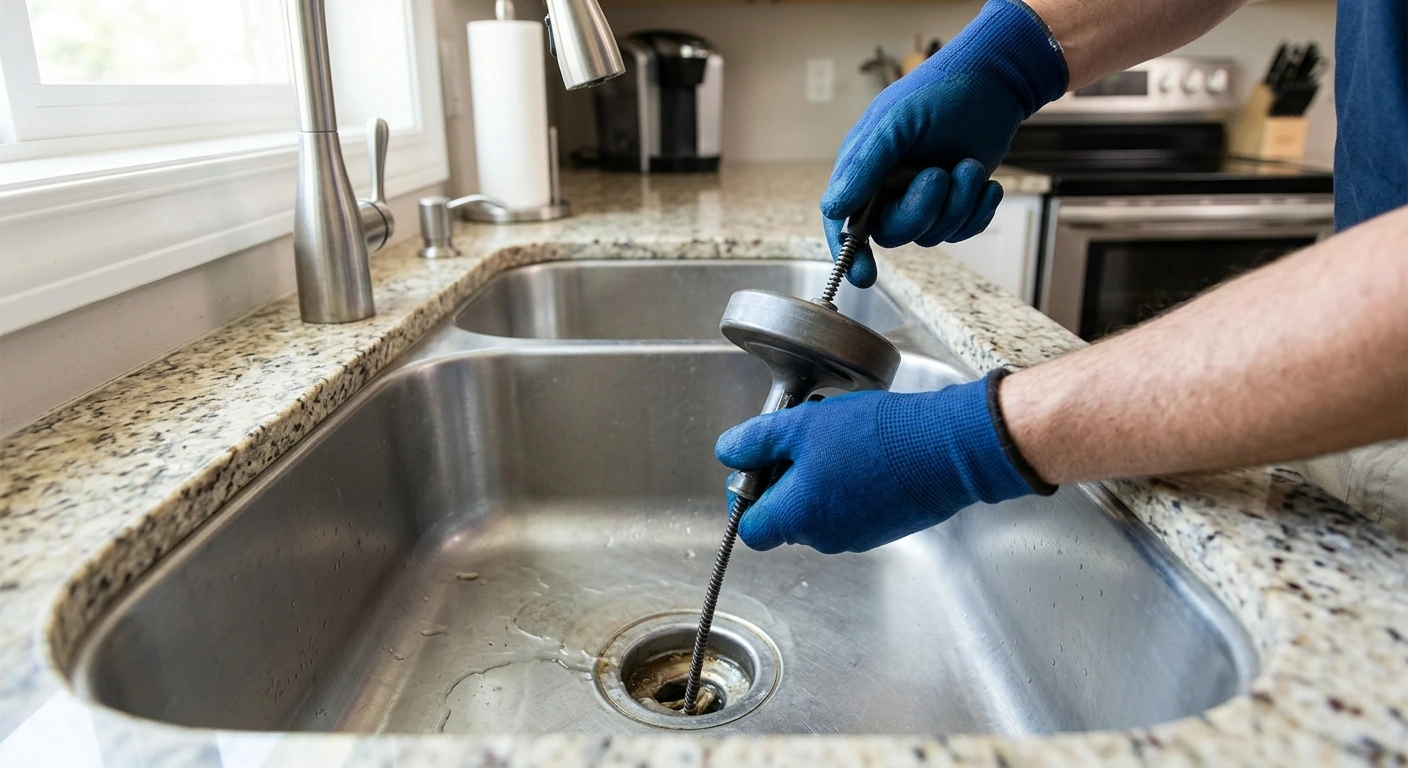
When plunging fails, a drain snake or auger provides mechanical force to break through stubborn obstructions. Feed the snake’s cable into the drain opening slowly, turning the handle clockwise as you push. You will feel resistance when you encounter the clog. Continue rotating and applying steady pressure to either break apart the blockage or hook it for removal. In Central Texas homes with older plumbing, tree roots occasionally infiltrate outdoor lines through small cracks, creating obstructions that require professional sewer line services, but indoor clogs typically respond well to snaking.
For a gentler chemical-free alternative, combine one-half cup of baking soda with one-half cup of white vinegar. Pour the baking soda down the drain first, follow immediately with the vinegar, then cover the drain opening with a wet cloth or stopper. The resulting chemical reaction creates foam that can dislodge organic material and mineral buildup. Allow this mixture to work for 30 minutes, then flush with hot water. This method works particularly well for maintenance and mild clogs caused by soap and hard water deposits common throughout the Cedar Park area, though it lacks the strength to clear severe blockages that an emergency plumber would need to address.
Tackling Persistent Blockages with Advanced Techniques
For clogs that resist simpler methods, removing and cleaning the P-trap often provides the solution. Place a bucket beneath the curved pipe under your sink to catch water and debris. Use a pipe wrench or adjustable pliers to loosen the slip nuts on both ends of the trap, then carefully remove the entire section. Many blockages accumulate right in this curved section where hair, grease, and soap combine with the mineral-heavy water typical of Central Texas. Empty the trap into your bucket, then use a bottle brush or old toothbrush to scrub the interior thoroughly before rinsing with hot water.
If the trap is clear, the obstruction likely sits further down the drainpipe. With the trap removed, you have direct access to the wall pipe. Feed your drain snake into this opening to reach deeper blockages. Enzyme-based drain cleaners offer another advanced option for organic clogs, breaking down hair and grease over several hours without the pipe damage caused by chemical drain cleaners. These biological treatments work slowly but safely, making them ideal for monthly maintenance. However, if you encounter recurring issues, notice multiple slow drains throughout your home, or detect sewer odors, these symptoms often indicate problems requiring leak detection services or professional excavation contractor work to address underlying pipe deterioration or main line obstructions.
Preventing Future Clogs and Recognizing When to Call a Professional
Establish preventive habits to minimize future blockages. Install mesh drain screens in all sinks and tubs to catch hair and food particles before they enter your pipes. Never pour cooking grease down kitchen drains; instead, let it solidify in a container and dispose of it in your trash. Run hot water through your drains for 30 seconds after each use to help flush away soap and residue. Once monthly, treat drains with the baking soda and vinegar method as preventive maintenance, particularly important given Cedar Park’s hard water, which accelerates mineral buildup inside pipes.
Certain situations require professional intervention rather than DIY attempts. Contact drain cleaning Cedar Park TX specialists if you experience sewage backups, notice water pooling around multiple fixtures simultaneously, hear gurgling sounds from drains or toilets, or detect persistent foul odors. These symptoms often indicate main line blockages or damaged pipes that require professional equipment and expertise. Similarly, if you have attempted multiple methods without success, continuing to work on the drain risks causing pipe damage that leads to costly burst pipe repair. Water heater services and water filtration service installations can also reduce the mineral content contributing to chronic drain issues. Professional plumbers possess camera inspection equipment to diagnose hidden problems and hydro-jetting tools that safely clear severe obstructions without damaging your plumbing system.